 (6)
(6)


| 製品: | AP2 alpha/beta Antibody |
| カタログ: | AF0535 |
| タンパク質の説明: | Rabbit polyclonal antibody to AP2 alpha/beta |
| アプリケーション: | WB IHC IF/ICC |
| Cited expt.: | WB |
| 反応性: | Human, Mouse, Rat |
| 予測: | Pig, Zebrafish, Bovine, Horse, Sheep, Rabbit, Dog, Chicken, Xenopus |
| 分子量: | 49kDa(Observed); 48kD,50kD(Calculated). |
| ユニプロット: | P05549 | Q92481 |
| RRID: | AB_2834124 |
Control Products
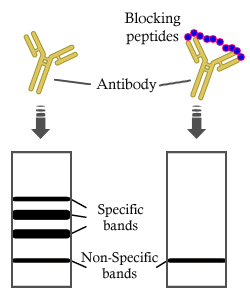
製品説明
*The optimal dilutions should be determined by the end user. For optimal experimental results, antibody reuse is not recommended.
*Tips:
WB: For western blot detection of denatured protein samples. IHC: For immunohistochemical detection of paraffin sections (IHC-p) or frozen sections (IHC-f) of tissue samples. IF/ICC: For immunofluorescence detection of cell samples. ELISA(peptide): For ELISA detection of antigenic peptide.
引用形式: Affinity Biosciences Cat# AF0535, RRID:AB_2834124.
折りたたみ/展開
Activating enhancer binding protein 2 alpha; Activating enhancer-binding protein 2-alpha; Activator protein 2; AP 2 transcription factor; AP 2alpha; AP-2; AP-2 transcription factor; AP2; AP2 Transcription Factor; AP2-alpha; AP2A_HUMAN; AP2TF; BOFS; FLJ51761; TFAP 2; TFAP 2A; TFAP2; TFAP2A; Transcription factor AP 2 alpha (activating enhancer binding protein 2 alpha); Transcription factor AP-2-alpha; Transcription factor AP2 alpha; Activating enhancer binding protein 2 beta; Activating enhancer-binding protein 2-beta; AP 2B; AP2 B; AP2-beta; AP2B; AP2B_HUMAN; AP2beta; MGC21381; OTTHUMP00000039925; PDA2; TFAP 2B; Tfap2b; Transcription factor AP 2 beta; Transcription factor AP-2-beta; Transcription factor AP2 beta;
免疫原
A synthesized peptide derived from human AP2 alpha/beta, corresponding to a region within C-terminal amino acids.
- P05549 AP2A_HUMAN:
- Protein BLAST With
- NCBI/
- ExPASy/
- Uniprot
MLWKLTDNIKYEDCEDRHDGTSNGTARLPQLGTVGQSPYTSAPPLSHTPNADFQPPYFPPPYQPIYPQSQDPYSHVNDPYSLNPLHAQPQPQHPGWPGQRQSQESGLLHTHRGLPHQLSGLDPRRDYRRHEDLLHGPHALSSGLGDLSIHSLPHAIEEVPHVEDPGINIPDQTVIKKGPVSLSKSNSNAVSAIPINKDNLFGGVVNPNEVFCSVPGRLSLLSSTSKYKVTVAEVQRRLSPPECLNASLLGGVLRRAKSKNGGRSLREKLDKIGLNLPAGRRKAANVTLLTSLVEGEAVHLARDFGYVCETEFPAKAVAEFLNRQHSDPNEQVTRKNMLLATKQICKEFTDLLAQDRSPLGNSRPNPILEPGIQSCLTHFNLISHGFGSPAVCAAVTALQNYLTEALKAMDKMYLSNNPNSHTDNNAKSSDKEEKHRK
- Q92481 AP2B_HUMAN:
- Protein BLAST With
- NCBI/
- ExPASy/
- Uniprot
MHSPPRDQAAIMLWKLVENVKYEDIYEDRHDGVPSHSSRLSQLGSVSQGPYSSAPPLSHTPSSDFQPPYFPPPYQPLPYHQSQDPYSHVNDPYSLNPLHQPQQHPWGQRQRQEVGSEAGSLLPQPRAALPQLSGLDPRRDYHSVRRPDVLLHSAHHGLDAGMGDSLSLHGLGHPGMEDVQSVEDANNSGMNLLDQSVIKKVPVPPKSVTSLMMNKDGFLGGMSVNTGEVFCSVPGRLSLLSSTSKYKVTVGEVQRRLSPPECLNASLLGGVLRRAKSKNGGRSLRERLEKIGLNLPAGRRKAANVTLLTSLVEGEAVHLARDFGYICETEFPAKAVSEYLNRQHTDPSDLHSRKNMLLATKQLCKEFTDLLAQDRTPIGNSRPSPILEPGIQSCLTHFSLITHGFGAPAICAALTALQNYLTEALKGMDKMFLNNTTTNRHTSGEGPGSKTGDKEEKHRK
種類予測
Score>80(red) has high confidence and is suggested to be used for WB detection. *The prediction model is mainly based on the alignment of immunogen sequences, the results are for reference only, not as the basis of quality assurance.
High(score>80) Medium(80>score>50) Low(score<50) No confidence
研究背景
Sequence-specific DNA-binding protein that interacts with inducible viral and cellular enhancer elements to regulate transcription of selected genes. AP-2 factors bind to the consensus sequence 5'-GCCNNNGGC-3' and activate genes involved in a large spectrum of important biological functions including proper eye, face, body wall, limb and neural tube development. They also suppress a number of genes including MCAM/MUC18, C/EBP alpha and MYC. AP-2-alpha is the only AP-2 protein required for early morphogenesis of the lens vesicle. Together with the CITED2 coactivator, stimulates the PITX2 P1 promoter transcription activation. Associates with chromatin to the PITX2 P1 promoter region.
Sumoylated on Lys-10; which inhibits transcriptional activity.
Nucleus.
The PPxY motif mediates interaction with WWOX.
Belongs to the AP-2 family.
Sequence-specific DNA-binding protein that interacts with inducible viral and cellular enhancer elements to regulate transcription of selected genes. AP-2 factors bind to the consensus sequence 5'-GCCNNNGGC-3' and activate genes involved in a large spectrum of important biological functions including proper eye, face, body wall, limb and neural tube development. They also suppress a number of genes including MCAM/MUC18, C/EBP alpha and MYC. AP-2-beta appears to be required for normal face and limb development and for proper terminal differentiation and function of renal tubular epithelia.
Sumoylated on Lys-21; which inhibits transcriptional activity.
Nucleus.
Belongs to the AP-2 family.
参考文献

Application: WB Species: Human Sample: LUAD and adjacent tissues

Application: WB Species: mouse Sample:
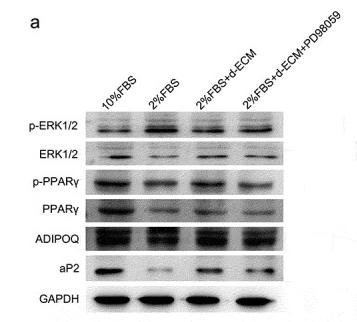
Application: WB Species: Human Sample: ADSCs

Application: WB Species: Mice Sample: lung
Restrictive clause
Affinity Biosciences tests all products strictly. Citations are provided as a resource for additional applications that have not been validated by Affinity Biosciences. Please choose the appropriate format for each application and consult Materials and Methods sections for additional details about the use of any product in these publications.
For Research Use Only.
Not for use in diagnostic or therapeutic procedures. Not for resale. Not for distribution without written consent. Affinity Biosciences will not be held responsible for patent infringement or other violations that may occur with the use of our products. Affinity Biosciences, Affinity Biosciences Logo and all other trademarks are the property of Affinity Biosciences LTD.