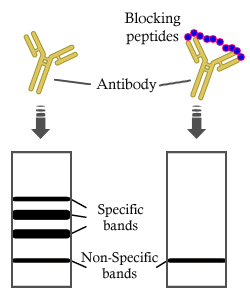
製品: IFRD1 Antibody
カタログ: DF2392
タンパク質の説明: Rabbit polyclonal antibody to IFRD1
アプリケーション: WB IHC IF/ICC
Cited expt.: WB
反応性: Human, Mouse, Rat
予測: Pig, Bovine, Sheep, Rabbit, Dog, Chicken
分子量: 50 kDa; 50kD(Calculated).
ユニプロット: O00458
RRID: AB_2839600

類似製品を見る>>

   サイズ 価格 在庫状況
 100ul $280 在庫あり
 200ul $350 在庫あり

リードタイム: 当日配達

For pricing and ordering contact:
お問い合わせ先

製品説明

ソース:
Rabbit
アプリケーション:
IHC 1:50-1:200, WB 1:500-1:2000, IF/ICC 1:100-1:500
*The optimal dilutions should be determined by the end user. For optimal experimental results, antibody reuse is not recommended.
*Tips:

WB: For western blot detection of denatured protein samples. IHC: For immunohistochemical detection of paraffin sections (IHC-p) or frozen sections (IHC-f) of tissue samples. IF/ICC: For immunofluorescence detection of cell samples. ELISA(peptide): For ELISA detection of antigenic peptide.

反応性:
Human,Mouse,Rat
予測:
Pig(100%), Bovine(100%), Sheep(100%), Rabbit(100%), Dog(100%), Chicken(82%)
クローナリティ:
Polyclonal
特異性:
IFRD1 Antibody detects endogenous levels of total IFRD1.
RRID:
AB_2839600
引用形式: Affinity Biosciences Cat# DF2392, RRID:AB_2839600.
コンジュゲート:
Unconjugated.
精製:
The antiserum was purified by peptide affinity chromatography using SulfoLink™ Coupling Resin (Thermo Fisher Scientific).
保存:
Rabbit IgG in phosphate buffered saline, pH 7.4, 150mM NaCl, 0.02% sodium azide and 50% glycerol. Store at -20 °C. Stable for 12 months from date of receipt.
別名:

折りたたみ/展開

12 O tetradecanoylphorbol 13 acetate induced sequence 7; IFRD1; IFRD1_HUMAN; interferon related developmental regulator 1; Interferon-related developmental regulator 1; Nerve growth factor inducible protein PC4; Nerve growth factor-inducible protein PC4; PC4; Pheochromocytoma cell 4; TIS7; TPA induced sequence 7;

免疫原

免疫原:

A synthesized peptide derived from human IFRD1, corresponding to a region within N-terminal amino acids.

Uniprot:
遺伝子(ID):
発現特異性:
O00458 IFRD1_HUMAN:

Expressed in a variety of tissues.

タンパク質の説明:
Could play a role in regulating gene activity in the proliferative and/or differentiative pathways induced by NGF. May be an autocrine factor that attenuates or amplifies the initial ligand-induced signal.
タンパク質配列:
MPKNKKRNTPHRGSSAGGGGSGAAAATAATAGGQHRNVQPFSDEDASIETMSHCSGYSDPSSFAEDGPEVLDEEGTQEDLEYKLKGLIDLTLDKSAKTRQAALEGIKNALASKMLYEFILERRMTLTDSIERCLKKGKSDEQRAAAALASVLCIQLGPGIESEEILKTLGPILKKIICDGSASMQARQTCATCFGVCCFIATDDITELYSTLECLENIFTKSYLKEKDTTVICSTPNTVLHISSLLAWTLLLTICPINEVKKKLEMHFHKLPSLLSCDDVNMRIAAGESLALLFELARGIESDFFYEDMESLTQMLRALATDGNKHRAKVDKRKQRSVFRDVLRAVEERDFPTETIKFGPERMYIDCWVKKHTYDTFKEVLGSGMQYHLQSNEFLRNVFELGPPVMLDAATLKTMKISRFERHLYNSAAFKARTKARSKCRDKRADVGEFF

種類予測

種類予測:

Score>80(red) has high confidence and is suggested to be used for WB detection. *The prediction model is mainly based on the alignment of immunogen sequences, the results are for reference only, not as the basis of quality assurance.

Species
Results
Score
Pig
100
Bovine
100
Sheep
100
Dog
100
Rabbit
100
Chicken
82
Xenopus
64
Horse
0
Zebrafish
0
Model Confidence:
High(score>80) Medium(80>score>50) Low(score<50) No confidence

研究背景

機能:

Could play a role in regulating gene activity in the proliferative and/or differentiative pathways induced by NGF. May be an autocrine factor that attenuates or amplifies the initial ligand-induced signal (By similarity).

組織特異性:

Expressed in a variety of tissues.

タンパク質ファミリー:

Belongs to the IFRD family.

参考文献

1). Valproic Acid Stimulates Hippocampal Neurogenesis via Activating the Wnt/β-Catenin Signaling Pathway in the APP/PS1/Nestin-GFP Triple Transgenic Mouse Model of Alzheimer's Disease. Frontiers in Aging Neuroscience, 2019 (PubMed: 30971911) [IF=4.1]

Application: WB    Species: Mouse    Sample: Hippocampus tissue
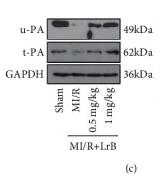
Figure 6 VPA inhibits glycogen synthase kinase-3β (GSK-3β) activity and stimulates the Wnt/β-catenin signaling pathway. (A) Western blot analysis of total GSK-3β and p-GSK-3βS9 (pSer9). GAPDH was used as an internal control. (B) Densitometric analysis of total GSK-3β and p-GSK-3βS9 (pSer9). VPA increased pSer9-GSK-3β levels but not total GSK-3β levels in AD mice. (C) Immunoblots of β-catenin, Wnt3a and NeuroD1; β-actin was used as an internal control. (D) Densitometric analysis of β-catenin, Wnt3a and NeuroD1 normalized to β-actin. VPA increased β-catenin, Wnt3a and NeuroD1 levels in AD mice. *P < 0.05, **P < 0.001, ***P < 0.0001.

2). Loureirin B Alleviates Myocardial Ischemia/Reperfusion Injury via Inhibiting PAI-1/TGF-β1/Smad Signaling Pathway. Evidence-based Complementary and Alternative Medicine, 2022 (PubMed: 35535157)

Application: WB    Species: Mice    Sample:

Figure 4 LrB suppressed the expression of PAI-1 and the activation of TGF-β1/Smad signaling pathway in MI/R mice. (a) Representative images showing the distribution of PAI-1 in cardiac tissues after immunofluorescence staining. Scar bar = 50 μm. (b, c) Relative mRNA and protein expression of urokinase plasminogen activator (uPA) and tissue-type plasminogen activator (tPA) in the cardiac tissues. (d) Western blot analysis for TGF-β1R, TGF-β1, p-Smad2/3, and Smad2/3. Relative protein expression of (e) PAI-1, (f) TGF-β1R, (g) TGF-β1, (h) p-Smad2/3, and (i) Smad2/3 in the cardiac tissues. Values are expressed as mean ± SD (n = 6). +++p < 0.001vs. sham group. ∗p < 0.05, ∗∗p < 0.01, ∗∗∗p < 0.001vs. MI/R group.

Restrictive clause


Affinity Biosciences tests all products strictly. Citations are provided as a resource for additional applications that have not been validated by Affinity Biosciences. Please choose the appropriate format for each application and consult Materials and Methods sections for additional details about the use of any product in these publications.

For Research Use Only.
Not for use in diagnostic or therapeutic procedures. Not for resale. Not for distribution without written consent. Affinity Biosciences will not be held responsible for patent infringement or other violations that may occur with the use of our products. Affinity Biosciences, Affinity Biosciences Logo and all other trademarks are the property of Affinity Biosciences LTD.