


Control Products
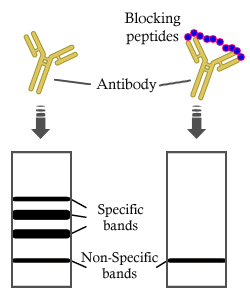
製品説明
*The optimal dilutions should be determined by the end user. For optimal experimental results, antibody reuse is not recommended.
*Tips:
WB: For western blot detection of denatured protein samples. IHC: For immunohistochemical detection of paraffin sections (IHC-p) or frozen sections (IHC-f) of tissue samples. IF/ICC: For immunofluorescence detection of cell samples. ELISA(peptide): For ELISA detection of antigenic peptide.
引用形式: Affinity Biosciences Cat# DF6983, RRID:AB_2838939.
折りたたみ/展開
Cas like docking; Cas scaffolding protein family member 2; CAS-L; CAS2; CasL; CASL_HUMAN; CASS2; Crk associated substrate related; Crk associated substrate related protein; CRK-associated substrate-related protein; dJ49G10.2 (Enhancer of Filamentation 1 (HEF1)); dJ49G10.2; dJ761I2.1 (enhancer of filamentation (HEF1)); dJ761I2.1; Enhancer of filamentation 1; Enhancer of filamentation 1 p55; HEF 1; HEF1; NEDD-9; Nedd9; Neural precursor cell expressed developmentally down-regulated protein 9; P105; Renal carcinoma antigen NY-REN-12;
免疫原
A synthesized peptide derived from human NEDD9, corresponding to a region within the internal amino acids.
Widely expressed. Higher levels detected in kidney, lung, and placenta. Also detected in T-cells, B-cells and diverse cell lines. The protein has been detected in lymphocytes, in diverse cell lines, and in lung tissues.
- Q14511 CASL_HUMAN:
- Protein BLAST With
- NCBI/
- ExPASy/
- Uniprot
MKYKNLMARALYDNVPECAEELAFRKGDILTVIEQNTGGLEGWWLCSLHGRQGIVPGNRVKLLIGPMQETASSHEQPASGLMQQTFGQQKLYQVPNPQAAPRDTIYQVPPSYQNQGIYQVPTGHGTQEQEVYQVPPSVQRSIGGTSGPHVGKKVITPVRTGHGYVYEYPSRYQKDVYDIPPSHTTQGVYDIPPSSAKGPVFSVPVGEIKPQGVYDIPPTKGVYAIPPSACRDEAGLREKDYDFPPPMRQAGRPDLRPEGVYDIPPTCTKPAGKDLHVKYNCDIPGAAEPVARRHQSLSPNHPPPQLGQSVGSQNDAYDVPRGVQFLEPPAETSEKANPQERDGVYDVPLHNPPDAKGSRDLVDGINRLSFSSTGSTRSNMSTSSTSSKESSLSASPAQDKRLFLDPDTAIERLQRLQQALEMGVSSLMALVTTDWRCYGYMERHINEIRTAVDKVELFLKEYLHFVKGAVANAACLPELILHNKMKRELQRVEDSHQILSQTSHDLNECSWSLNILAINKPQNKCDDLDRFVMVAKTVPDDAKQLTTTINTNAEALFRPGPGSLHLKNGPESIMNSTEYPHGGSQGQLLHPGDHKAQAHNKALPPGLSKEQAPDCSSSDGSERSWMDDYDYVHLQGKEEFERQQKELLEKENIMKQNKMQLEHHQLSQFQLLEQEITKPVENDISKWKPSQSLPTTNSGVSAQDRQLLCFYYDQCETHFISLLNAIDALFSCVSSAQPPRIFVAHSKFVILSAHKLVFIGDTLTRQVTAQDIRNKVMNSSNQLCEQLKTIVMATKMAALHYPSTTALQEMVHQVTDLSRNAQLFKRSLLEMATF
種類予測
Score>80(red) has high confidence and is suggested to be used for WB detection. *The prediction model is mainly based on the alignment of immunogen sequences, the results are for reference only, not as the basis of quality assurance.
High(score>80) Medium(80>score>50) Low(score<50) No confidence
研究背景
Docking protein which plays a central coordinating role for tyrosine-kinase-based signaling related to cell adhesion. May function in transmitting growth control signals between focal adhesions at the cell periphery and the mitotic spindle in response to adhesion or growth factor signals initiating cell proliferation. May play an important role in integrin beta-1 or B cell antigen receptor (BCR) mediated signaling in B- and T-cells. Integrin beta-1 stimulation leads to recruitment of various proteins including CRK, NCK and SHPTP2 to the tyrosine phosphorylated form.
Cell cycle-regulated processing produces four isoforms: p115, p105, p65, and p55. Isoform p115 arises from p105 phosphorylation and appears later in the cell cycle. Isoform p55 arises from p105 as a result of cleavage at a caspase cleavage-related site and it appears specifically at mitosis. The p65 isoform is poorly detected.
PTK2/FAK1 phosphorylates the protein at the YDYVHL motif (conserved among all cas proteins). The SRC family kinases (FYN, SRC, LCK and CRK) are recruited to the phosphorylated sites and can phosphorylate other tyrosine residues. Ligation of either integrin beta-1 or B-cell antigen receptor on tonsillar B-cells and B-cell lines promotes tyrosine phosphorylation and both integrin and BCR-mediated tyrosine phosphorylation requires an intact actin network. In fibroblasts transformation with oncogene v-ABL results in an increase in tyrosine phosphorylation. Transiently phosphorylated following CD3 cross-linking and this phosphorylated form binds to CRK and C3G. A mutant lacking the SH3 domain is phosphorylated upon CD3 cross-linking but not upon integrin beta-1 cross-linking. Tyrosine phosphorylation occurs upon stimulation of the G-protein coupled C1a calcitonin receptor. Calcitonin-stimulated tyrosine phosphorylation is mediated by calcium- and protein kinase C-dependent mechanisms and requires the integrity of the actin cytoskeleton. Phosphorylation at Ser-369 induces proteasomal degradation.
Cytoplasm>Cell cortex. Nucleus. Golgi apparatus. Cell projection>Lamellipodium. Cytoplasm. Cell junction>Focal adhesion.
Note: Localizes to both the cell nucleus and the cell periphery and is differently localized in fibroblasts and epithelial cells. In fibroblasts is predominantly nuclear and in some cells is present in the Golgi apparatus. In epithelial cells localized predominantly in the cell periphery with particular concentration in lamellipodia but is also found in the nucleus. Isoforms p105 and p115 are predominantly cytoplasmic and associate with focal adhesions while p55 associates with mitotic spindle.
Cytoplasm>Cytoskeleton>Spindle.
Widely expressed. Higher levels detected in kidney, lung, and placenta. Also detected in T-cells, B-cells and diverse cell lines. The protein has been detected in lymphocytes, in diverse cell lines, and in lung tissues.
Contains a central domain containing multiple potential SH2-binding sites and a C-terminal domain containing a divergent helix-loop-helix (HLH) motif. The SH2-binding sites putatively bind CRK, NCK and ABL SH2 domains. The HLH motif confers specific interaction with the HLH proteins ID2, E12 and E47. It is absolutely required for the induction of pseudohyphal growth in yeast and mediates homodimerization and heterodimerization with p130cas.
The SH3 domain interacts with two proline-rich regions of PTK2/FAK1.
Belongs to the CAS family.
Restrictive clause
Affinity Biosciences tests all products strictly. Citations are provided as a resource for additional applications that have not been validated by Affinity Biosciences. Please choose the appropriate format for each application and consult Materials and Methods sections for additional details about the use of any product in these publications.
For Research Use Only.
Not for use in diagnostic or therapeutic procedures. Not for resale. Not for distribution without written consent. Affinity Biosciences will not be held responsible for patent infringement or other violations that may occur with the use of our products. Affinity Biosciences, Affinity Biosciences Logo and all other trademarks are the property of Affinity Biosciences LTD.