 (2)
(2)

| 製品: | Cullin 1 Antibody |
| カタログ: | DF6859 |
| タンパク質の説明: | Rabbit polyclonal antibody to Cullin 1 |
| アプリケーション: | IHC IF/ICC |
| 反応性: | Human, Mouse, Rat |
| 予測: | Pig, Bovine, Horse, Rabbit, Dog, Chicken, Xenopus |
| 分子量: | 90kDa(Observed); 90kD(Calculated). |
| ユニプロット: | Q13616 |
| RRID: | AB_2838818 |
Control Products
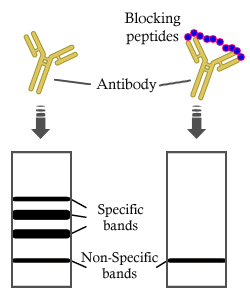
製品説明
*The optimal dilutions should be determined by the end user. For optimal experimental results, antibody reuse is not recommended.
*Tips:
WB: For western blot detection of denatured protein samples. IHC: For immunohistochemical detection of paraffin sections (IHC-p) or frozen sections (IHC-f) of tissue samples. IF/ICC: For immunofluorescence detection of cell samples. ELISA(peptide): For ELISA detection of antigenic peptide.
引用形式: Affinity Biosciences Cat# DF6859, RRID:AB_2838818.
折りたたみ/展開
CUL 1; CUL-1; CUL1; CUL1_HUMAN; Cullin-1; Cullin1; MGC149834; MGC149835;
免疫原
A synthesized peptide derived from human Cullin 1, corresponding to a region within C-terminal amino acids.
- Q13616 CUL1_HUMAN:
- Protein BLAST With
- NCBI/
- ExPASy/
- Uniprot
MSSTRSQNPHGLKQIGLDQIWDDLRAGIQQVYTRQSMAKSRYMELYTHVYNYCTSVHQSNQARGAGVPPSKSKKGQTPGGAQFVGLELYKRLKEFLKNYLTNLLKDGEDLMDESVLKFYTQQWEDYRFSSKVLNGICAYLNRHWVRRECDEGRKGIYEIYSLALVTWRDCLFRPLNKQVTNAVLKLIEKERNGETINTRLISGVVQSYVELGLNEDDAFAKGPTLTVYKESFESQFLADTERFYTRESTEFLQQNPVTEYMKKAEARLLEEQRRVQVYLHESTQDELARKCEQVLIEKHLEIFHTEFQNLLDADKNEDLGRMYNLVSRIQDGLGELKKLLETHIHNQGLAAIEKCGEAALNDPKMYVQTVLDVHKKYNALVMSAFNNDAGFVAALDKACGRFINNNAVTKMAQSSSKSPELLARYCDSLLKKSSKNPEEAELEDTLNQVMVVFKYIEDKDVFQKFYAKMLAKRLVHQNSASDDAEASMISKLKQACGFEYTSKLQRMFQDIGVSKDLNEQFKKHLTNSEPLDLDFSIQVLSSGSWPFQQSCTFALPSELERSYQRFTAFYASRHSGRKLTWLYQLSKGELVTNCFKNRYTLQASTFQMAILLQYNTEDAYTVQQLTDSTQIKMDILAQVLQILLKSKLLVLEDENANVDEVELKPDTLIKLYLGYKNKKLRVNINVPMKTEQKQEQETTHKNIEEDRKLLIQAAIVRIMKMRKVLKHQQLLGEVLTQLSSRFKPRVPVIKKCIDILIEKEYLERVDGEKDTYSYLA
種類予測
Score>80(red) has high confidence and is suggested to be used for WB detection. *The prediction model is mainly based on the alignment of immunogen sequences, the results are for reference only, not as the basis of quality assurance.
High(score>80) Medium(80>score>50) Low(score<50) No confidence
研究背景
Core component of multiple cullin-RING-based SCF (SKP1-CUL1-F-box protein) E3 ubiquitin-protein ligase complexes, which mediate the ubiquitination of proteins involved in cell cycle progression, signal transduction and transcription. SCF complexes and ARIH1 collaborate in tandem to mediate ubiquitination of target proteins. In the SCF complex, serves as a rigid scaffold that organizes the SKP1-F-box protein and RBX1 subunits. May contribute to catalysis through positioning of the substrate and the ubiquitin-conjugating enzyme. The E3 ubiquitin-protein ligase activity of the complex is dependent on the neddylation of the cullin subunit and exchange of the substrate recognition component is mediated by TIP120A/CAND1. The functional specificity of the SCF complex depends on the F-box protein as substrate recognition component. SCF(BTRC) and SCF(FBXW11) direct ubiquitination of CTNNB1 and participate in Wnt signaling. SCF(FBXW11) directs ubiquitination of phosphorylated NFKBIA. SCF(BTRC) directs ubiquitination of NFKBIB, NFKBIE, ATF4, SMAD3, SMAD4, CDC25A, FBXO5 and probably NFKB2. SCF(BTRC) and/or SCF(FBXW11) direct ubiquitination of CEP68. SCF(SKP2) directs ubiquitination of phosphorylated CDKN1B/p27kip and is involved in regulation of G1/S transition. SCF(SKP2) directs ubiquitination of ORC1, CDT1, RBL2, ELF4, CDKN1A, RAG2, FOXO1A, and probably MYC and TAL1. SCF(FBXW7) directs ubiquitination of CCNE1, NOTCH1 released notch intracellular domain (NICD), and probably PSEN1. SCF(FBXW2) directs ubiquitination of GCM1. SCF(FBXO32) directs ubiquitination of MYOD1. SCF(FBXO7) directs ubiquitination of BIRC2 and DLGAP5. SCF(FBXO33) directs ubiquitination of YBX1. SCF(FBXO1) directs ubiquitination of BCL6 and DTL but does not seem to direct ubiquitination of TP53. SCF(BTRC) mediates the ubiquitination of NFKBIA at 'Lys-21' and 'Lys-22'; the degradation frees the associated NFKB1-RELA dimer to translocate into the nucleus and to activate transcription. SCF(CCNF) directs ubiquitination of CCP110. SCF(FBXL3) and SCF(FBXL21) direct ubiquitination of CRY1 and CRY2. SCF(FBXO9) directs ubiquitination of TTI1 and TELO2. SCF(FBXO10) directs ubiquitination of BCL2.
Neddylated; which enhances the ubiquitination activity of SCF and prevents binding of the inhibitor CAND1. Deneddylated via its interaction with the COP9 signalosome (CSN) complex.
(Microbial infection) Deneddylated by Epstein-Barr virus BPLF1 leading to a S-phase-like environment that is required for efficient replication of the viral genome.
Expressed in lung fibroblasts.
Belongs to the cullin family.
研究領域
· Cellular Processes > Cell growth and death > Cell cycle. (View pathway)
· Cellular Processes > Cell growth and death > Oocyte meiosis. (View pathway)
· Environmental Information Processing > Signal transduction > Wnt signaling pathway. (View pathway)
· Environmental Information Processing > Signal transduction > Hedgehog signaling pathway. (View pathway)
· Environmental Information Processing > Signal transduction > TGF-beta signaling pathway. (View pathway)
· Genetic Information Processing > Folding, sorting and degradation > Ubiquitin mediated proteolysis. (View pathway)
· Genetic Information Processing > Folding, sorting and degradation > Protein processing in endoplasmic reticulum. (View pathway)
· Human Diseases > Infectious diseases: Viral > Herpes simplex infection.
· Human Diseases > Cancers: Overview > Pathways in cancer. (View pathway)
· Organismal Systems > Environmental adaptation > Circadian rhythm. (View pathway)
参考文献
Restrictive clause
Affinity Biosciences tests all products strictly. Citations are provided as a resource for additional applications that have not been validated by Affinity Biosciences. Please choose the appropriate format for each application and consult Materials and Methods sections for additional details about the use of any product in these publications.
For Research Use Only.
Not for use in diagnostic or therapeutic procedures. Not for resale. Not for distribution without written consent. Affinity Biosciences will not be held responsible for patent infringement or other violations that may occur with the use of our products. Affinity Biosciences, Affinity Biosciences Logo and all other trademarks are the property of Affinity Biosciences LTD.