 (1)
(1)
| 製品: | TFAM Antibody |
| カタログ: | DF6696 |
| タンパク質の説明: | Rabbit polyclonal antibody to TFAM |
| アプリケーション: | IHC |
| Cited expt.: | |
| 反応性: | Human, Rat |
| 分子量: | 23kDa(Observed); 29kD(Calculated). |
| ユニプロット: | Q00059 |
| RRID: | AB_2838658 |
Control Products
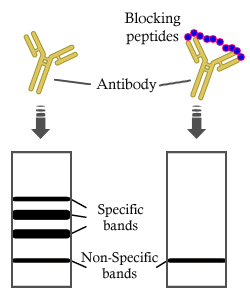
製品説明
*The optimal dilutions should be determined by the end user. For optimal experimental results, antibody reuse is not recommended.
*Tips:
WB: For western blot detection of denatured protein samples. IHC: For immunohistochemical detection of paraffin sections (IHC-p) or frozen sections (IHC-f) of tissue samples. IF/ICC: For immunofluorescence detection of cell samples. ELISA(peptide): For ELISA detection of antigenic peptide.
引用形式: Affinity Biosciences Cat# DF6696, RRID:AB_2838658.
折りたたみ/展開
anscription factor 6-like 1; Mitochondrial transcription factor 1; mitochondrial transcription factor A; MtTF1; mtTFA; TCF 6; TCF-6; TCF6; TCF6L1; TCF6L2; TCF6L3; TFAM; TFAM_HUMAN; Transcription factor 6; Transcription factor 6 like 2 (mitochondrial transcription factor); Transcription factor 6 like 2; Transcription factor 6-like 2; transcription factor 6-like 3; Transcription factor A, mitochondrial; Transcription factor A, mitochondrial; Transcription factor A, mitochondrial precursor;
免疫原
A synthesized peptide derived from human TFAM, corresponding to a region within the internal amino acids.
- Q00059 TFAM_HUMAN:
- Protein BLAST With
- NCBI/
- ExPASy/
- Uniprot
MAFLRSMWGVLSALGRSGAELCTGCGSRLRSPFSFVYLPRWFSSVLASCPKKPVSSYLRFSKEQLPIFKAQNPDAKTTELIRRIAQRWRELPDSKKKIYQDAYRAEWQVYKEEISRFKEQLTPSQIMSLEKEIMDKHLKRKAMTKKKELTLLGKPKRPRSAYNVYVAERFQEAKGDSPQEKLKTVKENWKNLSDSEKELYIQHAKEDETRYHNEMKSWEEQMIEVGRKDLLRRTIKKQRKYGAEEC
研究背景
Binds to the mitochondrial light strand promoter and functions in mitochondrial transcription regulation. Component of the mitochondrial transcription initiation complex, composed at least of TFB2M, TFAM and POLRMT that is required for basal transcription of mitochondrial DNA. In this complex, TFAM recruits POLRMT to a specific promoter whereas TFB2M induces structural changes in POLRMT to enable promoter opening and trapping of the DNA non-template strand. Required for accurate and efficient promoter recognition by the mitochondrial RNA polymerase. Promotes transcription initiation from the HSP1 and the light strand promoter by binding immediately upstream of transcriptional start sites. Is able to unwind DNA. Bends the mitochondrial light strand promoter DNA into a U-turn shape via its HMG boxes. Required for maintenance of normal levels of mitochondrial DNA. May play a role in organizing and compacting mitochondrial DNA.
Phosphorylation by PKA within the HMG box 1 impairs DNA binding and promotes degradation by the AAA+ Lon protease.
Mitochondrion. Mitochondrion matrix>Mitochondrion nucleoid.
Binds DNA via its HMG boxes. When bound to the mitochondrial light strand promoter, bends DNA into a U-turn shape, each HMG box bending the DNA by 90 degrees.
研究領域
· Environmental Information Processing > Signal transduction > Apelin signaling pathway. (View pathway)
· Human Diseases > Neurodegenerative diseases > Huntington's disease.
参考文献
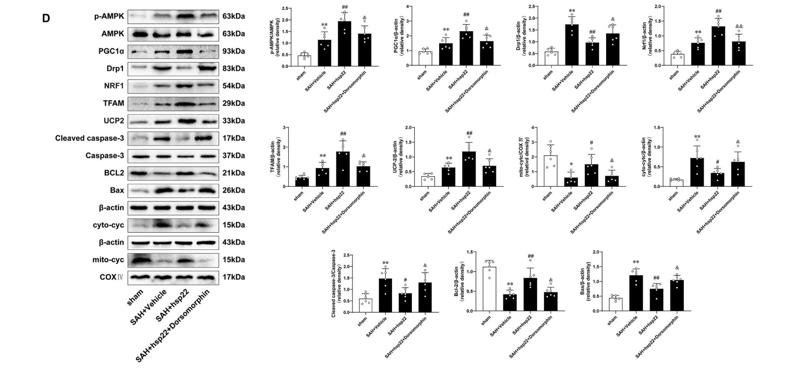
Application: WB Species: rat Sample: brain
Restrictive clause
Affinity Biosciences tests all products strictly. Citations are provided as a resource for additional applications that have not been validated by Affinity Biosciences. Please choose the appropriate format for each application and consult Materials and Methods sections for additional details about the use of any product in these publications.
For Research Use Only.
Not for use in diagnostic or therapeutic procedures. Not for resale. Not for distribution without written consent. Affinity Biosciences will not be held responsible for patent infringement or other violations that may occur with the use of our products. Affinity Biosciences, Affinity Biosciences Logo and all other trademarks are the property of Affinity Biosciences LTD.