

Control Products
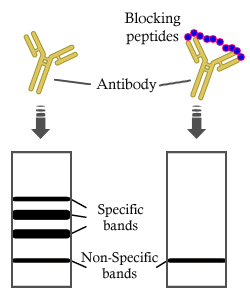
製品説明
*The optimal dilutions should be determined by the end user. For optimal experimental results, antibody reuse is not recommended.
*Tips:
WB: For western blot detection of denatured protein samples. IHC: For immunohistochemical detection of paraffin sections (IHC-p) or frozen sections (IHC-f) of tissue samples. IF/ICC: For immunofluorescence detection of cell samples. ELISA(peptide): For ELISA detection of antigenic peptide.
引用形式: Affinity Biosciences Cat# DF3824, RRID:AB_2836181.
折りたたみ/展開
ATN1; Atrophin1; B37; D12S755E; Dentatorubral-pallidoluysian atrophy protein; DRPLA; HRS; NOD;
免疫原
A synthesized peptide derived from human Atrophin 1, corresponding to a region within N-terminal amino acids.
Widely expressed in various tissues including heart, lung, kidney, ovary, testis, prostate, placenta, skeletal Low levels in the liver, thymus and leukocytes. In the adult brain, broadly expressed in amygdala, caudate nucleus, corpus callosum, hippocampus, hypothalamus, substantia nigra, subthalamic nucleus, and thalamus. High levels in fetal tissues, especially brain.
- P54259 ATN1_HUMAN:
- Protein BLAST With
- NCBI/
- ExPASy/
- Uniprot
MKTRQNKDSMSMRSGRKKEAPGPREELRSRGRASPGGVSTSSSDGKAEKSRQTAKKARVEEASTPKVNKQGRSEEISESESEETNAPKKTKTEQELPRPQSPSDLDSLDGRSLNDDGSSDPRDIDQDNRSTSPSIYSPGSVENDSDSSSGLSQGPARPYHPPPLFPPSPQPPDSTPRQPEASFEPHPSVTPTGYHAPMEPPTSRMFQAPPGAPPPHPQLYPGGTGGVLSGPPMGPKGGGAASSVGGPNGGKQHPPPTTPISVSSSGASGAPPTKPPTTPVGGGNLPSAPPPANFPHVTPNLPPPPALRPLNNASASPPGLGAQPLPGHLPSPHAMGQGMGGLPPGPEKGPTLAPSPHSLPPASSSAPAPPMRFPYSSSSSSSAAASSSSSSSSSSASPFPASQALPSYPHSFPPPTSLSVSNQPPKYTQPSLPSQAVWSQGPPPPPPYGRLLANSNAHPGPFPPSTGAQSTAHPPVSTHHHHHQQQQQQQQQQQQQQQQQQQHHGNSGPPPPGAFPHPLEGGSSHHAHPYAMSPSLGSLRPYPPGPAHLPPPHSQVSYSQAGPNGPPVSSSSNSSSSTSQGSYPCSHPSPSQGPQGAPYPFPPVPTVTTSSATLSTVIATVASSPAGYKTASPPGPPPYGKRAPSPGAYKTATPPGYKPGSPPSFRTGTPPGYRGTSPPAGPGTFKPGSPTVGPGPLPPAGPSGLPSLPPPPAAPASGPPLSATQIKQEPAEEYETPESPVPPARSPSPPPKVVDVPSHASQSARFNKHLDRGFNSCARSDLYFVPLEGSKLAKKRADLVEKVRREAEQRAREEKEREREREREKEREREKERELERSVKLAQEGRAPVECPSLGPVPHRPPFEPGSAVATVPPYLGPDTPALRTLSEYARPHVMSPGNRNHPFYVPLGAVDPGLLGYNVPALYSSDPAAREREREARERDLRDRLKPGFEVKPSELEPLHGVPGPGLDPFPRHGGLALQPGPPGLHPFPFHPSLGPLERERLALAAGPALRPDMSYAERLAAERQHAERVAALGNDPLARLQMLNVTPHHHQHSHIHSHLHLHQQDAIHAASASVHPLIDPLASGSHLTRIPYPAGTLPNPLLPHPLHENEVLRHQLFAAPYRDLPASLSAPMSAAHQLQAMHAQSAELQRLALEQQQWLHAHHPLHSVPLPAQEDYYSHLKKESDKPL
種類予測
Score>80(red) has high confidence and is suggested to be used for WB detection. *The prediction model is mainly based on the alignment of immunogen sequences, the results are for reference only, not as the basis of quality assurance.
High(score>80) Medium(80>score>50) Low(score<50) No confidence
研究背景
Transcriptional corepressor. Recruits NR2E1 to repress transcription. Promotes vascular smooth cell (VSMC) migration and orientation (By similarity). Corepressor of MTG8 transcriptional repression. Has some intrinsic repression activity which is independent of the number of poly-Gln (polyQ) repeats.
Phosphorylated in vitro by MAPK8/JNK1 on Ser-739. Mutant ATN1 sequences with expanded poly-Gln (polyQ) traits are more slowly phosphorylated.
Proteolytically cleaved, probably in the nucleus, to produce two C-terminal fragments of 140 kDa (F1) and 125 kDa (F2) each containing poly-Gln (polyQ) tracts. F2 is produced by cleavage by caspases and is exported into the cytoplasm. In vitro, cleavage increases with an increase in the number of polyQ tracts. C-terminal proteolytic products appear to be the cause of cell toxicity. In vitro cleavage at Asp-109.
Nucleus. Cytoplasm>Perinuclear region. Cell junction.
Note: Shuttles between nucleus and cytoplasm. Colocalizes with FAT1 in the perinuclear area, at cell-cell junctions and leading edges of cells (By similarity). Colocalizes with MTG8 in discrete nuclear dots. Proteolytic fragment F1 appears to remain in nucleus. Fragment F2 is exported into the cytoplasm. Fragment F2 from mutant sequences with longer poly-Gln (polyQ) tracts are additionally located to the cytoplasmic membrane and to certain organelles.
Widely expressed in various tissues including heart, lung, kidney, ovary, testis, prostate, placenta, skeletal Low levels in the liver, thymus and leukocytes. In the adult brain, broadly expressed in amygdala, caudate nucleus, corpus callosum, hippocampus, hypothalamus, substantia nigra, subthalamic nucleus, and thalamus. High levels in fetal tissues, especially brain.
The HX repeat motif is a specific pH-dependent interaction motif for ions and/or proteins or other biomelecules. This motif could be involved in the control of embryonic development.
Restrictive clause
Affinity Biosciences tests all products strictly. Citations are provided as a resource for additional applications that have not been validated by Affinity Biosciences. Please choose the appropriate format for each application and consult Materials and Methods sections for additional details about the use of any product in these publications.
For Research Use Only.
Not for use in diagnostic or therapeutic procedures. Not for resale. Not for distribution without written consent. Affinity Biosciences will not be held responsible for patent infringement or other violations that may occur with the use of our products. Affinity Biosciences, Affinity Biosciences Logo and all other trademarks are the property of Affinity Biosciences LTD.