

| 製品: | WAC Antibody |
| カタログ: | DF15014 |
| タンパク質の説明: | Rabbit polyclonal antibody to WAC |
| アプリケーション: | WB ELISA(peptide) |
| 反応性: | Human, Mouse |
| 分子量: | 80kD(Observed); 71kD(Calculated). |
| ユニプロット: | Q9BTA9 |
Control Products
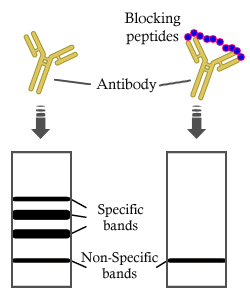
製品説明
*The optimal dilutions should be determined by the end user. For optimal experimental results, antibody reuse is not recommended.
*Tips:
WB: For western blot detection of denatured protein samples. IHC: For immunohistochemical detection of paraffin sections (IHC-p) or frozen sections (IHC-f) of tissue samples. IF/ICC: For immunofluorescence detection of cell samples. ELISA(peptide): For ELISA detection of antigenic peptide.
折りたたみ/展開
1110067P07Rik; BA48B24; BA48B24.1; BM 016; FLJ31290; KIAA1844; MGC10753; OTTHUMP00000019380; OTTHUMP00000019382; PRO1741; wac; WAC_HUMAN; WW domain containing adapter protein with coiled coil; WW domain containing adaptor with coiled coil; WW domain-containing adapter protein with coiled-coil; Wwp4;
免疫原
A synthesized peptide derived from human WAC.
- Q9BTA9 WAC_HUMAN:
- Protein BLAST With
- NCBI/
- ExPASy/
- Uniprot
MVMYARKQQRLSDGCHDRRGDSQPYQALKYSSKSHPSSGDHRHEKMRDAGDPSPPNKMLRRSDSPENKYSDSTGHSKAKNVHTHRVRERDGGTSYSPQENSHNHSALHSSNSHSSNPSNNPSKTSDAPYDSADDWSEHISSSGKKYYYNCRTEVSQWEKPKEWLEREQRQKEANKMAVNSFPKDRDYRREVMQATATSGFASGMEDKHSSDASSLLPQNILSQTSRHNDRDYRLPRAETHSSSTPVQHPIKPVVHPTATPSTVPSSPFTLQSDHQPKKSFDANGASTLSKLPTPTSSVPAQKTERKESTSGDKPVSHSCTTPSTSSASGLNPTSAPPTSASAVPVSPVPQSPIPPLLQDPNLLRQLLPALQATLQLNNSNVDISKINEVLTAAVTQASLQSIIHKFLTAGPSAFNITSLISQAAQLSTQAQPSNQSPMSLTSDASSPRSYVSPRISTPQTNTVPIKPLISTPPVSSQPKVSTPVVKQGPVSQSATQQPVTADKQQGHEPVSPRSLQRSSSQRSPSPGPNHTSNSSNASNATVVPQNSSARSTCSLTPALAAHFSENLIKHVQGWPADHAEKQASRLREEAHNMGTIHMSEICTELKNLRSLVRVCEIQATLREQRILFLRQQIKELEKLKNQNSFMV
研究背景
Acts as a linker between gene transcription and histone H2B monoubiquitination at 'Lys-120' (H2BK120ub1). Interacts with the RNA polymerase II transcriptional machinery via its WW domain and with RNF20-RNF40 via its coiled coil region, thereby linking and regulating H2BK120ub1 and gene transcription. Regulates the cell-cycle checkpoint activation in response to DNA damage. Positive regulator of amino acid starvation-induced autophagy. Also acts as a negative regulator of basal autophagy. Positively regulates MTOR activity by promoting, in an energy-dependent manner, the assembly of the TTT complex composed of TELO2, TTI1 and TTI2 and the RUVBL complex composed of RUVBL1 and RUVBL2 into the TTT-RUVBL complex. This leads to the dimerization of the mTORC1 complex and its subsequent activation. May negatively regulate the ubiquitin proteasome pathway.
Phosphorylated on tyrosine residues.
Nucleus speckle. Nucleus.
Note: In distinct nuclear speckles. Colocalizes with pre-mRNA processing complexes.
Restrictive clause
Affinity Biosciences tests all products strictly. Citations are provided as a resource for additional applications that have not been validated by Affinity Biosciences. Please choose the appropriate format for each application and consult Materials and Methods sections for additional details about the use of any product in these publications.
For Research Use Only.
Not for use in diagnostic or therapeutic procedures. Not for resale. Not for distribution without written consent. Affinity Biosciences will not be held responsible for patent infringement or other violations that may occur with the use of our products. Affinity Biosciences, Affinity Biosciences Logo and all other trademarks are the property of Affinity Biosciences LTD.