 (1)
(1)

Control Products
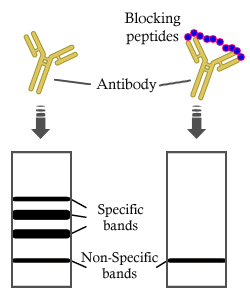
製品説明
*The optimal dilutions should be determined by the end user. For optimal experimental results, antibody reuse is not recommended.
*Tips:
WB: For western blot detection of denatured protein samples. IHC: For immunohistochemical detection of paraffin sections (IHC-p) or frozen sections (IHC-f) of tissue samples. IF/ICC: For immunofluorescence detection of cell samples. ELISA(peptide): For ELISA detection of antigenic peptide.
折りたたみ/展開
hPROML2; MGC138714; OTTHUMP00000160939; OTTHUMP00000207357; PROM 2; PROM-2; PROM2; PROM2_HUMAN; Prominin like protein 2; Prominin related protein; Prominin-2; Prominin-like protein 2; PROML2;
免疫原
A synthesized peptide derived from human PROM2.
Present in saliva within small membrane particles (at protein level). Expressed in kidney, prostate, trachea, esophagus, salivary gland, thyroid gland, mammary gland adrenal gland, placenta, stomach, spinal cord and liver. In submucosal tumor, expressed in spindle-shaped or stellate stromal cells. Expressed in prostate cancer cell lines.
- Q8N271 PROM2_HUMAN:
- Protein BLAST With
- NCBI/
- ExPASy/
- Uniprot
MKHTLALLAPLLGLGLGLALSQLAAGATDCKFLGPAEHLTFTPAARARWLAPRVRAPGLLDSLYGTVRRFLSVVQLNPFPSELVKALLNELASVKVNEVVRYEAGYVVCAVIAGLYLLLVPTAGLCFCCCRCHRRCGGRVKTEHKALACERAALMVFLLLTTLLLLIGVVCAFVTNQRTHEQMGPSIEAMPETLLSLWGLVSDVPQELQAVAQQFSLPQEQVSEELDGVGVSIGSAIHTQLRSSVYPLLAAVGSLGQVLQVSVHHLQTLNATVVELQAGQQDLEPAIREHRDRLLELLQEARCQGDCAGALSWARTLELGADFSQVPSVDHVLHQLKGVPEANFSSMVQEENSTFNALPALAAMQTSSVVQELKKAVAQQPEGVRTLAEGFPGLEAASRWAQALQEVEESSRPYLQEVQRYETYRWIVGCVLCSVVLFVVLCNLLGLNLGIWGLSARDDPSHPEAKGEAGARFLMAGVGLSFLFAAPLILLVFATFLVGGNVQTLVCQSWENGELFEFADTPGNLPPSMNLSQLLGLRKNISIHQAYQQCKEGAALWTVLQLNDSYDLEEHLDINQYTNKLRQELQSLKVDTQSLDLLSSAARRDLEALQSSGLQRIHYPDFLVQIQRPVVKTSMEQLAQELQGLAQAQDNSVLGQRLQEEAQGLRNLHQEKVVPQQSLVAKLNLSVRALESSAPNLQLETSDVLANVTYLKGELPAWAARILRNVSECFLAREMGYFSQYVAWVREEVTQRIATCQPLSGALDNSRVILCDMMADPWNAFWFCLAWCTFFLIPSIIFAVKTSKYFRPIRKRLSSTSSEETQLFHIPRVTSLKL
研究背景
Glycosylated.
Apical cell membrane>Multi-pass membrane protein. Basolateral cell membrane>Multi-pass membrane protein. Cell projection>Microvillus membrane>Multi-pass membrane protein. Cell projection>Cilium membrane>Multi-pass membrane protein.
Note: Colocalizes with PROM1. Associates with membrane in a cholesterol-dependent manner. Localizes to the apical and basolateral membranes of epithelial cells (By similarity).
Present in saliva within small membrane particles (at protein level). Expressed in kidney, prostate, trachea, esophagus, salivary gland, thyroid gland, mammary gland adrenal gland, placenta, stomach, spinal cord and liver. In submucosal tumor, expressed in spindle-shaped or stellate stromal cells. Expressed in prostate cancer cell lines.
Belongs to the prominin family.
参考文献

Application: WB Species: Mouse Sample:

Application: IHC Species: Mouse Sample:
Restrictive clause
Affinity Biosciences tests all products strictly. Citations are provided as a resource for additional applications that have not been validated by Affinity Biosciences. Please choose the appropriate format for each application and consult Materials and Methods sections for additional details about the use of any product in these publications.
For Research Use Only.
Not for use in diagnostic or therapeutic procedures. Not for resale. Not for distribution without written consent. Affinity Biosciences will not be held responsible for patent infringement or other violations that may occur with the use of our products. Affinity Biosciences, Affinity Biosciences Logo and all other trademarks are the property of Affinity Biosciences LTD.