 (1)
(1)

Control Products
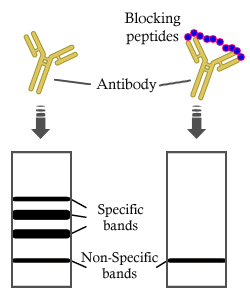
製品説明
*The optimal dilutions should be determined by the end user. For optimal experimental results, antibody reuse is not recommended.
*Tips:
WB: For western blot detection of denatured protein samples. IHC: For immunohistochemical detection of paraffin sections (IHC-p) or frozen sections (IHC-f) of tissue samples. IF/ICC: For immunofluorescence detection of cell samples. ELISA(peptide): For ELISA detection of antigenic peptide.
折りたたみ/展開
Musclin; Osteocrin; OSTN; OSTN_HUMAN;
免疫原
A synthesized peptide derived from human OSTN.
Enriched in neocortical regions of the developing cerebral cortex (PubMed:27830782). Not expressed in other compartments of the neocortical wall or in brain regions such as the hippocampus, striatum, mediodorsal nucleus of the thalamus and cerebellum (PubMed:27830782). Also expressed in bone (PubMed:14523025). In developing neonatal rib bone, present at high level in osteoblasts on bone-forming surfaces, in newly incorporated osteocytes and in some late hypertrophic chondrocytes (at protein level) (PubMed:15923362). In adult bone, localizes specifically to osteoblasts and young osteocytes at bone-forming sites (at protein level) (PubMed:15923362).
- P61366 OSTN_HUMAN:
- Protein BLAST With
- NCBI/
- ExPASy/
- Uniprot
MLDWRLASAHFILAVTLTLWSSGKVLSVDVTTTEAFDSGVIDVQSTPTVREEKSATDLTAKLLLLDELVSLENDVIETKKKRSFSGFGSPLDRLSAGSVDHKGKQRKVVDHPKRRFGIPMDRIGRNRLSNSRG
研究背景
Hormone that acts as a regulator of dendritic growth in the developing cerebral cortex in response to sensory experience. Induced in the brain following membrane depolarization and inhibits dendritic branching in neurons of the developing cortex. Probably acts by binding to natriuretic peptide receptor NPR3/NPR-C, thereby preventing binding between NPR3/NPR-C and natriuretic peptides, leading to increase cGMP production (By similarity).
Secreted.
Enriched in neocortical regions of the developing cerebral cortex. Not expressed in other compartments of the neocortical wall or in brain regions such as the hippocampus, striatum, mediodorsal nucleus of the thalamus and cerebellum. Also expressed in bone. In developing neonatal rib bone, present at high level in osteoblasts on bone-forming surfaces, in newly incorporated osteocytes and in some late hypertrophic chondrocytes (at protein level). In adult bone, localizes specifically to osteoblasts and young osteocytes at bone-forming sites (at protein level).
Belongs to the Osteocrin family.
参考文献
Restrictive clause
Affinity Biosciences tests all products strictly. Citations are provided as a resource for additional applications that have not been validated by Affinity Biosciences. Please choose the appropriate format for each application and consult Materials and Methods sections for additional details about the use of any product in these publications.
For Research Use Only.
Not for use in diagnostic or therapeutic procedures. Not for resale. Not for distribution without written consent. Affinity Biosciences will not be held responsible for patent infringement or other violations that may occur with the use of our products. Affinity Biosciences, Affinity Biosciences Logo and all other trademarks are the property of Affinity Biosciences LTD.